What is Teledermatology? How Remote Skin Cancer Services Work
Teledermatology is changing the way we access skin care – particularly when it comes to detecting and managing potential skin cancer. In a world where waiting times for in-person appointments can stretch for weeks or even months, the ability to have your skin concern reviewed remotely is more than just convenient – it’s practical, efficient and often life-saving.
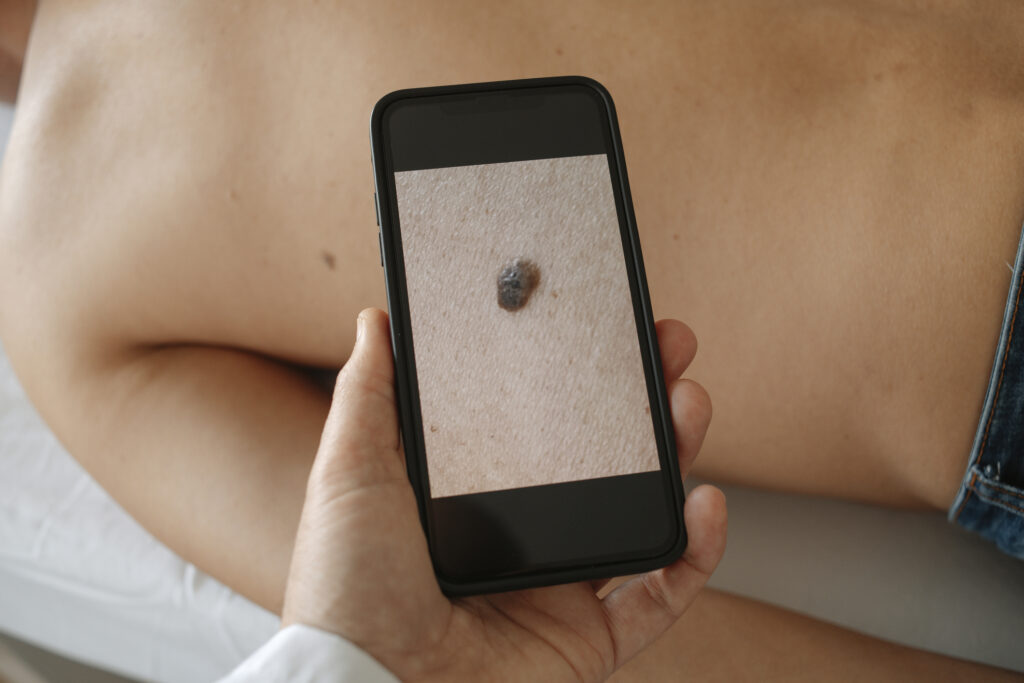
At its core, teledermatology involves the remote consultation of skin conditions using digital images, video, and clinical notes. Instead of seeing a dermatologist face-to-face as a first step, patients submit high-quality photographs of their skin concern, which are then assessed by a consultant or triaged using clinical tools, sometimes supported by artificial intelligence (AI).
In our experience, teledermatology isn’t about replacing in-person care – it’s about improving access, speeding up diagnosis, and ensuring that urgent cases receive attention as quickly as possible.
Let’s look at how teledermatology works, how it’s being used in skin cancer detection, and what this could mean for you or someone you care about.

What Is Teledermatology?
Teledermatology is a branch of telemedicine that allows patients to have skin conditions assessed by a dermatologist without needing to attend a clinic in person. It usually involves submitting clear images of a skin concern (such as a mole, rash, or lesion), along with supporting clinical information like duration, symptoms, and medical history.
The system may be:
- Asynchronous (store-and-forward): Where images and information are submitted and reviewed later by a clinician.
- Synchronous (live): Where a real-time video consultation takes place between the patient and a dermatologist.
For skin cancer assessments, asynchronous models are far more common – particularly within the NHS and many private pathways – as they allow specialists to assess a high volume of referrals quickly and flag those that need urgent attention.
Why Teledermatology Matters in Skin Cancer Detection
Skin cancer – particularly melanoma – is highly treatable when caught early. The challenge is making sure that people with potentially serious lesions are seen quickly, while avoiding unnecessary in-person referrals for harmless skin changes.
This is where teledermatology has had a real impact.
By allowing rapid remote triage, teledermatology helps dermatologists quickly determine whether a lesion looks benign, suspicious, or requires urgent review. That reduces pressure on secondary care, speeds up diagnosis for those who need it, and reassures patients without delay.
According to recent NHS figures, teledermatology can reduce face-to-face dermatology referrals by up to 60%, allowing hospital teams to focus on higher-risk cases. And in many cases, a mole or skin change that looks worrying to a patient or GP turns out to be completely harmless – saving time, anxiety and unnecessary appointments.
How the Process Works
In a typical teledermatology workflow, here’s what happens:
1. Image Submission
You or your GP take clear photos of the mole or skin concern, including close-ups and images from a distance to show its location. Some services use dermoscopic images – highly magnified, polarised images taken using a handheld device – to give greater detail.
These are submitted along with:
- A brief medical history
- Any symptoms (e.g. itching, bleeding, growth)
- Duration of concern
- Previous skin cancer history (if applicable)
2. Triage and Review
The images are reviewed by:
- A consultant dermatologist, or
- An AI-supported triage system trained on thousands of skin lesion images
If AI is used, it can flag high-risk images for immediate review or assign a risk score that guides next steps. However, a consultant always makes the final decision before treatment is advised.
3. Outcome and Advice
Once reviewed, you receive one of the following outcomes:
- No further action (benign lesion)
- Advice for monitoring with guidance on what to look out for
- Recommendation for in-person assessment or biopsy
In many NHS settings, this entire process now happens within 48–72 hours, significantly reducing delays in cancer diagnosis.
The Role of AI in Teledermatology
AI is playing a growing role in skin cancer triage. Tools based on deep learning algorithms can analyse images of moles and lesions to assess features such as asymmetry, border irregularity and colour variation – all key indicators of melanoma.
Recent studies suggest that AI, when combined with expert review, can improve diagnostic accuracy and streamline referrals. It’s particularly useful in high-volume teledermatology services, allowing human specialists to focus on cases most in need of attention.
That said, clinical experience remains essential. At The Devonshire Clinic, we believe AI should enhance care – not replace it – and we continue to rely on consultant-led decisions for all diagnostic outcomes.
Is Teledermatology Safe and Regulated?
Yes – teledermatology is now widely adopted across the UK and supported by guidelines from NHS England, the British Association of Dermatologists, and the Care Quality Commission (CQC). Any clinic offering teledermatology must ensure:
- Secure, GDPR-compliant handling of medical images and personal data
- Consultant-led decision-making for diagnostic outcomes
- Clear pathways for patients needing follow-up, treatment or further investigation
At our clinic, every remote assessment is carried out by an experienced consultant dermatologist, with the same level of scrutiny as an in-person appointment. If we believe a lesion needs to be examined directly, we’ll arrange a follow-up appointment or recommend next steps with your GP.
Who Should Use Teledermatology?
Teledermatology is ideal for patients who:
- Have a new or changing mole
- Have noticed a skin lesion that won’t heal
- Need initial reassurance before deciding whether to seek a full consultation
- Have difficulty accessing in-person dermatology due to distance, mobility or time constraints
It’s also particularly useful for patients with a history of skin cancer, who need to monitor multiple lesions over time.
We offer a dedicated Mole Screening and Skin Cancer Service, including teledermatology options where appropriate.
Frequently Asked Questions
Do I need a GP referral to use teledermatology?
Not always. While NHS pathways often begin with a GP referral, private patients can contact us directly for a consultant-led mole check or remote assessment.
Can teledermatology diagnose skin cancer definitively?
It can assess risk and help decide whether a lesion needs a biopsy – but a confirmed diagnosis still requires histopathological analysis of a tissue sample.
Is AI used in your clinic?
We stay up to date with AI developments, but all assessments are conducted by experienced dermatologists. Where appropriate, we may use image-enhancement tools to support diagnosis.
Is it safe to rely on a photo?
If the image is clear and taken correctly, teledermatology can be very effective. However, not all skin issues can be assessed remotely – and if there’s any uncertainty, we’ll always recommend an in-person review.
How long does it take to get a result?
Many assessments can be completed within 2–3 working days. Urgent cases are prioritised for immediate follow-up.
Should You Use Teledermatology?
If you’ve noticed a suspicious mole, an itchy lesion, or a skin change that’s causing concern, teledermatology offers a safe and fast first step toward getting answers. It reduces wait times, improves early detection, and allows you to access expert care without delay.
At The Devonshire Clinic, we offer a combination of remote and in-person skin cancer services – so whatever the outcome, you’re always in good hands.
To learn more or book a consultation, visit our Mole Screening Service page.