Chemical Peels vs. Laser vs. IPL: Which Is Right for Your Skin Concern?
Choosing between a chemical peel, laser treatment or IPL can feel overwhelming when all you really want is clearer, smoother, more even skin. At our Harley Street clinic, we see this question every week – often from patients who have read conflicting advice online or tried over-the-counter solutions without much success.
The reality is that there is no single “best” treatment; the right choice depends on your skin type, main concern and how much downtime you can realistically manage. Our consultant dermatologists offer a full range of skin rejuvenation, laser skin treatments and IPL photorejuvenation within our consultant-led cosmetic dermatology service, and the peels and laser treatments are also performed by our Laser and Aesthetic Practitioner, so we can help you compare options and build a plan that suits you rather than fitting you into a one‑size‑fits‑all package.
A Quick Overview: Peels, Laser and IPL
Before we look at specific concerns, it helps to understand the basic differences between each treatment.
- Chemical peels use carefully selected acids applied to the skin to lift away dull surface cells and stimulate renewal.
- Laser treatments use a single, focused wavelength of light to target specific structures in the skin (such as pigment or blood vessels) with high precision.
- IPL (Intense Pulsed Light) uses broad-spectrum light in short flashes to treat redness, pigmentation and sun damage over larger areas.
At The Devonshire Clinic, these options sit under our consultant-led skin rejuvenation techniques, allowing us to tailor depth, intensity and frequency to your skin’s needs rather than pushing one technology for everyone.
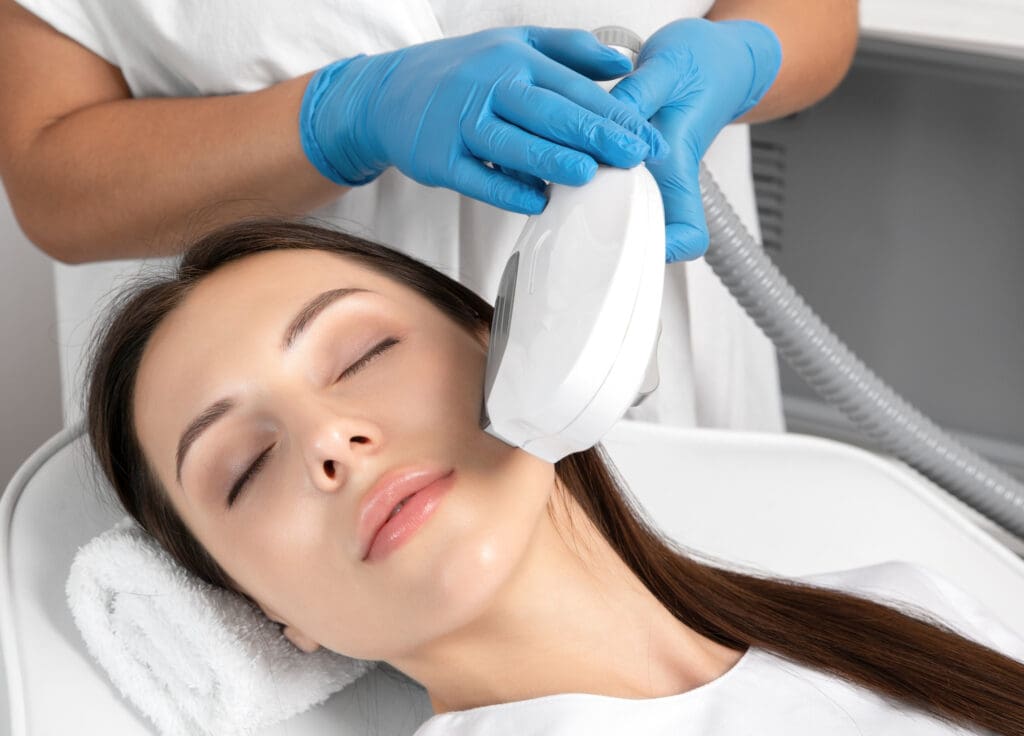
When Chemical Peels Are a Good Choice
Chemical peels are often a gentle, flexible starting point for patients whose main concerns sit closer to the surface of the skin.
What chemical peels help with
- Dull, tired-looking skin and uneven texture
- Fine lines and very superficial wrinkles
- Mild pigmentation, sun spots or post-inflammatory marks
- Congestion and some types of acne-prone skin
In clinic, we use peels as part of our skin rejuvenation offering when we want to refresh the surface, improve product absorption and restore radiance without significant downtime. Lighter peels can be a good option if you’re new to in-clinic treatments, or if you prefer a gradual, stepwise improvement over several sessions rather than a single, intensive procedure. The peels are also performed by our experienced Laser and Aesthetic Practitioner, who works closely with your dermatologist to ensure the treatment fits seamlessly into your overall plan.
Things to consider
- Results are usually progressive over a course of treatments rather than instant “one and done”.
- Stronger peels require more downtime and must be planned carefully, particularly in darker skin tones due to the risk of pigmentation changes.
- Sun protection and a simple, barrier-supporting skincare routine are essential after any peel.
If your main goal is smoother texture, brighter tone and a general “reset” – for example as part of a post‑holiday skin refresh – a tailored series of chemical peels can work very well alongside at‑home skincare adjustments.
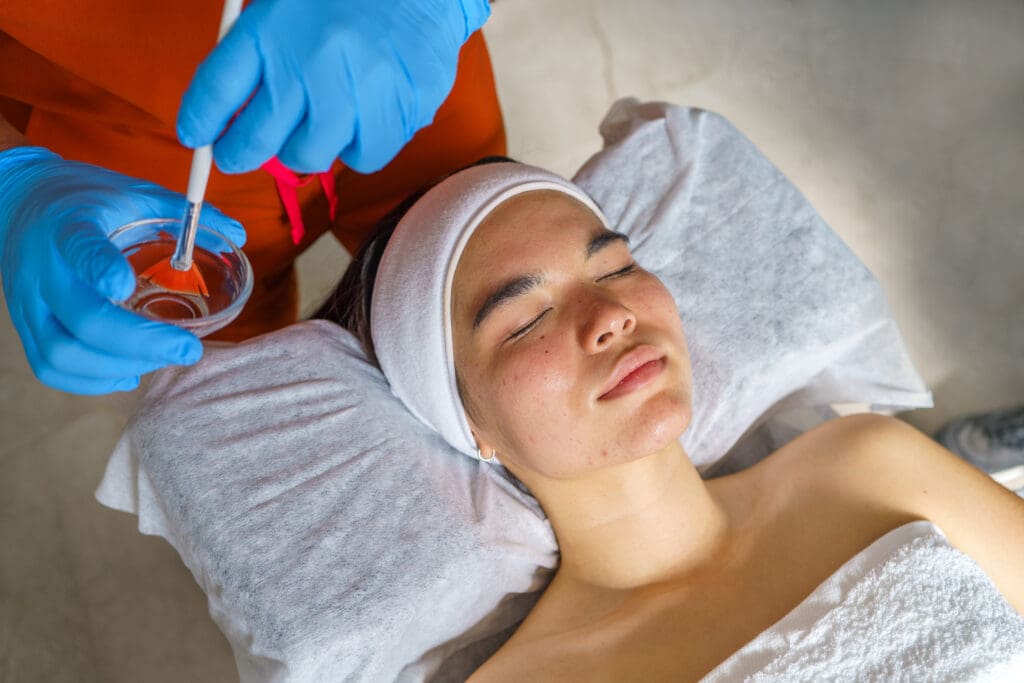
When Laser Treatments Make More Sense
Laser treatments are designed to target deeper or more specific issues than peels alone can reach. At The Devonshire Clinic, our laser skin treatments are used both medically and cosmetically, from treating blood vessels and sun damage to improving scars and texture.
What lasers help with
- Localised sun damage and stubborn pigmentation
- Broken blood vessels and certain types of redness
- Acne scarring and uneven texture
- Some benign skin lesions, depending on type
Because lasers use a single wavelength, they can be adjusted very precisely for your particular concern and skin type. This makes them especially useful when we need targeted correction – for example, treating discrete sun spots or defined areas of scarring rather than the whole face.
Things to consider
- Laser treatments may involve more downtime than light peels, with temporary redness, swelling or flaking while the skin repairs.
- Certain lasers are more suitable for some skin tones than others, so proper assessment is crucial, especially in medium to darker complexions.
- In many cases, fewer sessions are needed compared to peels, but this varies with the concern we are treating.
If your priority is improving scars, defined patches of pigmentation or more advanced sun damage, your dermatologist is likely to discuss laser options as part of a broader skin rejuvenation plan.
When IPL (Intense Pulsed Light) Is the Better Fit
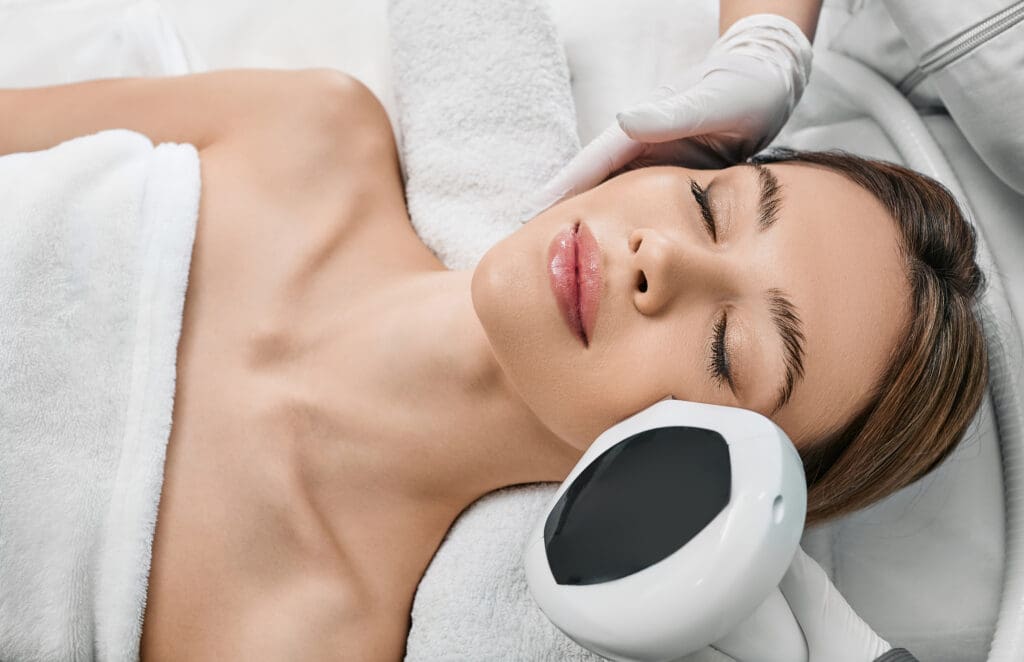
IPL sits somewhere between peels and laser in many patients’ minds, but in reality it has its own distinct role. Our team offers Intense Pulsed Light (IPL) treatments and IPL photorejuvenation for both cosmetic improvement and certain medical skin concerns.
What IPL helps with
- Diffuse facial redness and flushing
- Rosacea-related redness and thread veins
- Sun damage, freckles and age spots
- General “photoageing” – a mix of redness, pigmentation and mild texture change
IPL uses broad-spectrum light that can treat multiple concerns in one session over a relatively large area. It is particularly useful when redness and pigmentation are both present – for example, in patients with long-term sun exposure or erythematotelangiectatic rosacea who also have sun spots.
Things to consider
- IPL is typically best suited to lighter skin tones; in darker skin types it must be used very cautiously, or an alternative approach may be safer.
- You will usually need a short course of treatments to achieve optimal results, spaced a few weeks apart.
- Temporary redness or swelling is common immediately afterwards, and pigment often darkens slightly before fading.
When patients come to us struggling with redness, visible capillaries or patchy sun damage, IPL is often one of the main options we consider within our IPL photorejuvenation and rosacea treatment pathways.
How to Decide: Matching Treatment to Your Skin Concern
Because each technology has its strengths, we rarely recommend them in isolation. Instead, we look at your skin type, main concern and lifestyle to decide which combination is most appropriate.
|
Your main concern |
Often considered first-line |
|
Dullness, mild texture, early fine lines |
Light chemical peels within a skin rejuvenation plan |
|
Diffuse redness / rosacea |
IPL photorejuvenation plus medical rosacea care |
|
Localised sun spots / pigmentation |
Targeted laser skin treatment or IPL, sometimes combined with peels |
|
Acne scarring, uneven texture |
Laser skin treatments; possible combination with peels |
|
Mixed sun damage (redness + brown spots) |
IPL photorejuvenation and a tailored skin rejuvenation course under cosmetic dermatology |
In many cases, your plan may involve sequencing treatments – for example, using gentle peels first to improve texture and barrier function, then introducing IPL or laser for more targeted correction. All of this sits under our broader cosmetic dermatology service, so we can adapt as your skin changes rather than locking you into one approach.
Safety, Downtime and Skin Type: Why Expert Assessment Matters
Whichever route you take, safety and suitability for your skin type are crucial. All three treatments can cause side effects if used inappropriately – including redness, irritation, pigment changes or, rarely, scarring – which is why we emphasise consultant-led assessment and follow‑up.
At your consultation, we will:
- Assess your skin type (including Fitzpatrick type) and medical history.
- Discuss medications, previous treatments and any tendency to scar or pigment.
- Explore your priorities, timeframes and how much downtime you can realistically accommodate.
- Recommend a clear, staged plan that may include chemical peels, laser skin treatments, IPL photorejuvenation or a combination, alongside at‑home skincare.
If you’re unsure which route to take, the most helpful next step is usually a consultation under our cosmetic dermatology or skin rejuvenation services, where we can examine your skin in person and talk through the options in detail.
FAQs
Is a chemical peel or laser better for pigmentation?
It depends on the depth and pattern of pigmentation; superficial sun spots may respond well to a series of peels or IPL, while deeper or more stubborn patches often need targeted laser treatment as part of a tailored skin rejuvenation plan.
Is IPL the same as laser?
No. IPL uses broad-spectrum light, while laser uses a single wavelength; both can be effective, but they suit different concerns and skin types and are selected differently during your cosmetic dermatology consultation.
Which option has the least downtime?
Light chemical peels and milder IPL sessions typically involve the shortest downtime, whereas more intensive laser treatments and deeper peels may require several days of visible healing. We will talk this through with you before choosing a treatment.
Can I combine chemical peels with laser or IPL?
Sometimes, yes – we may sequence or alternate treatments to balance surface renewal with deeper rejuvenation, but this must be planned carefully to avoid over‑treating the skin. This is usually organised within a structured skin rejuvenation programme.
How do I know which is safest for my skin tone?
A dermatologist will assess your skin tone, history of pigmentation and overall skin health before recommending peels, laser or IPL, and will adjust settings and aftercare to minimise risk as part of our consultant-led cosmetic dermatology service.