The Best Treatments to Stimulate Collagen Production in the Skin
Collagen is one of the proteins responsible for giving our skin its structure, strength and firmness. When we’re younger, collagen is continually produced and remodelled, helping skin maintain its smooth, resilient appearance. As we age, however, this process gradually changes, while factors such as cumulative UV exposure can contribute to collagen breakdown.
For many of our patients, the first signs aren’t necessarily deep wrinkles. They may notice that their skin doesn’t feel quite as firm as it once did, pores appear more visible, fine lines remain after facial expressions relax, or areas such as the cheeks, jawline and neck begin to lose some of their previous elasticity. These changes are normal, but there are evidence-based ways to support skin quality if they become a cosmetic concern.
From our clinical experience, the most successful approach rarely comes from chasing a single ingredient or treatment. Collagen stimulating treatments can include professional treatments alongside carefully selected topical skincare, daily UV protection and habits that limit avoidable collagen damage. The right combination depends on your skin, age, medical history, concerns and expectations, which is why professional assessment is valuable before beginning more intensive treatment.

Why Does Collagen Decline as We Age?
Collagen forms part of the extracellular structure supporting the skin. Together with elastin and other components, it contributes to the firmness and resilience we associate with healthy skin. Ageing gradually alters the balance between the production of new collagen and the breakdown of existing fibres, contributing to thinner skin, fine lines and changes in texture.
Intrinsic ageing isn’t the only factor involved. Repeated exposure to ultraviolet radiation can accelerate collagen degradation and is a major contributor to premature skin ageing. Smoking and environmental influences can contribute too, while hormonal changes may affect skin thickness, hydration and elasticity at different stages of life.
This distinction is important because stimulating new collagen while repeatedly exposing existing collagen to damaging factors is unlikely to be the most effective long-term strategy. We therefore look at prevention and treatment together. Daily sun protection, appropriate skincare and professional treatments each have different roles to play.
It is equally important to recognise that collagen isn’t the explanation for every visible sign of ageing. Pigmentation, facial volume changes, bone structure, muscle activity and skin hydration can all affect appearance. A treatment designed to stimulate collagen may therefore be useful for one concern while being unsuitable for another.
Which Collagen Stimulating Treatments Can Improve Skin Quality?
Microneedling
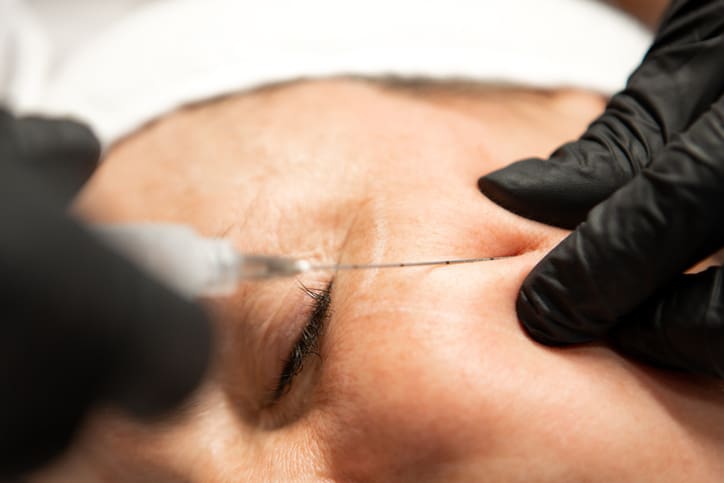
Microneedling is commonly used to encourage collagen remodelling. The treatment involves creating controlled microscopic injuries in the skin with fine sterile needles. These trigger a normal wound-healing response that includes fibroblast activity and the production and reorganisation of collagen.
We may consider microneedling for concerns such as acne scarring, fine lines, enlarged pores and uneven texture. Because the treatment relies on biological repair rather than creating an immediate structural change, results develop gradually. Depending on the concern and its severity, several sessions may be recommended.
Professional treatment is important because needle depth, technique and hygiene all affect safety. Deeper or more aggressive treatment isn’t automatically more effective. Excessive injury can increase inflammation, recovery time, pigmentation problems and other complications, particularly in susceptible skin.
Patients considering microneedling can discuss it as part of a wider assessment through our cosmetic dermatology service.
Radiofrequency Microneedling
Radiofrequency microneedling combines controlled needling with radiofrequency energy delivered into selected levels of the skin. This adds a thermal component to the controlled injury created by traditional microneedling, stimulating a repair response and collagen remodelling.
Depending on the individual, radiofrequency microneedling may be considered where reduced firmness, fine lines, textural changes or acne scarring are concerns. It can be particularly useful when we’re trying to improve overall skin quality without substantially changing the patient’s facial features.
Treatment needs to be adjusted according to skin type, treatment area and the issue we’re addressing. A patient seeking improvement in acne scarring, for example, won’t necessarily require the same settings or treatment plan as somebody concerned about early skin laxity.
Results also require patience. Some improvements can become apparent during the weeks following treatment, while collagen remodelling continues over a longer period. This gradual response is one reason these treatments appeal to patients looking for natural-looking changes rather than an obvious overnight difference.
Laser Skin Treatments
Certain laser treatments can encourage collagen remodelling while addressing other aspects of skin ageing. Depending on the technology used, laser treatments may be selected for concerns including fine lines, sun damage, uneven texture and pigmentation.
Resurfacing treatments work by producing a controlled injury to selected layers of skin, initiating healing and renewal. Other laser technologies work differently and may be used primarily for vascular or pigmentary concerns, so the term “laser treatment” shouldn’t be treated as though it describes one treatment.
This is where specialist assessment matters. Skin type, pigmentation, medical history, sun exposure and acceptable downtime all influence which laser – if any – is appropriate. Treatment that is too aggressive or poorly matched to the patient can increase the risk of unwanted pigmentary changes or prolonged irritation.
Winter can sometimes be a convenient period for treatments requiring careful sun avoidance during recovery, although UV protection remains necessary throughout the year. You can explore the wider range of options available through our cosmetic dermatology services.
Chemical Peels
Chemical peels are primarily associated with exfoliation and skin renewal, but selected professional peels can form part of a broader strategy for addressing visible signs of ageing. Different formulations and strengths act at different depths, meaning a superficial peel is very different from a deeper medical treatment.
Peels may be considered where concerns such as dullness, uneven texture, pigmentation and fine lines occur together. By promoting controlled exfoliation and renewal, appropriately selected peels can improve the appearance and feel of the skin. Some deeper approaches can stimulate dermal remodelling as part of the healing response.
More peeling doesn’t necessarily mean a better result. Choosing an appropriate treatment strength is particularly important for patients prone to pigmentation or sensitivity. Professional assessment allows us to balance potential improvement against recovery and risk.
Aftercare is important too. Recently treated skin generally needs gentle skincare and careful UV protection, while retinoids, exfoliating acids and other potentially irritating ingredients may need to be paused around treatment according to the advice provided.
Can Skincare Help Stimulate Collagen?
Professional treatments aren’t the only part of maintaining collagen. Certain topical ingredients have good evidence behind them and can complement in-clinic treatment when they’re suitable for the individual.
Topical Retinoids
Retinoids are derivatives of vitamin A and are among the most extensively studied topical ingredients for photoaged skin. Different forms and strengths are available, ranging from cosmetic retinol formulations to prescription topical retinoids.
With consistent use, retinoids can encourage epidermal cell turnover and affect processes involved in collagen production and degradation. Over time, this can help improve fine lines, texture and areas of uneven pigmentation.
The important word is consistent. Using a strong retinoid occasionally and causing repeated irritation isn’t necessarily better than using an appropriate formulation regularly. Dryness, peeling and irritation can occur, particularly during the early stages, so we generally recommend introducing retinoids gradually and supporting the skin with a suitable moisturiser.
Retinoids aren’t appropriate for everyone, and specific precautions apply during pregnancy. Patients with sensitive or inflammatory skin conditions may also require a more individual approach. A dermatologist can advise whether a retinoid is suitable and which strength makes sense for your skin.

Vitamin C and Antioxidant Protection
Vitamin C has a different role. It is an antioxidant and an essential cofactor in collagen synthesis, making it a useful ingredient within certain long-term skincare routines.
Topical vitamin C can help protect against oxidative stress caused by environmental exposure and may improve the appearance of uneven pigmentation and dullness. It works particularly well as part of a morning routine alongside broad-spectrum sunscreen, rather than being treated as an alternative to SPF.
Formulation matters considerably. Vitamin C products vary in concentration, stability and the form of vitamin C they contain, so a high percentage printed on a bottle doesn’t automatically mean a better product.
For patients interested in maintaining skin quality over many years, antioxidants, retinoids, moisturisation and UV protection can provide a sensible foundation. Professional treatments can then be added where there is a specific concern that skincare alone is unlikely to address sufficiently.
Protecting the Collagen You Already Have
Stimulating collagen is only half of the conversation. Protecting existing collagen from avoidable damage is equally relevant to maintaining healthy-looking skin.
UV protection is one of the most important measures we recommend. The NHS advises using suitable sunscreen alongside shade and protective clothing when appropriate. The British Association of Dermatologists similarly provides sun-safety guidance intended to reduce excessive UV exposure and associated skin damage.
For everyday skincare, we generally recommend an appropriate broad-spectrum SPF, particularly on exposed areas. Sunscreen needs to be applied adequately and reapplied when circumstances require it. During stronger sunshine, sunscreen should form part of a wider protection strategy rather than giving a false sense that unlimited exposure is safe.
Smoking is another avoidable factor associated with premature skin ageing. A balanced diet providing adequate protein, vitamins and minerals also supports normal biological processes, although supplements shouldn’t be expected to reproduce the effects of dermatological treatments.
Sleep, exercise and general health matter for overall wellbeing as well. We prefer to place collagen treatments within this broader context rather than suggesting that one treatment can compensate for every factor affecting the skin.
What Results Can You Realistically Expect?
One of the most important things we discuss with patients is timing. Collagen stimulating treatments rely partly on biological processes that don’t happen immediately. Although temporary swelling after a treatment can initially make skin appear fuller, this shouldn’t be confused with the final result.
Collagen remodelling can continue for weeks or months following certain treatments. Depending on the concern, a course of treatments may be recommended, with sufficient time between appointments for the skin to recover and respond.
The extent of improvement also varies. Age, genetics, treatment area, severity of scarring or laxity and lifestyle factors can all influence results. Someone seeking subtle improvement in early fine lines will have very different expectations from someone treating established acne scars. We believe realistic treatment planning produces better patient experiences. The objective is improvement in skin quality rather than promising perfectly smooth skin or permanent prevention of ageing.

Frequently Asked Questions
What are collagen stimulating treatments?
Collagen stimulating treatments are treatments or topical approaches intended to encourage collagen production or remodelling within the skin. Examples can include microneedling, radiofrequency microneedling, selected laser treatments, certain medical peels and topical retinoids.
What is the best treatment for stimulating collagen?
There isn’t one treatment that’s best for everyone. Microneedling may be appropriate for one patient, while radiofrequency treatment, laser therapy or a skincare programme may make more sense for another. The right choice depends on your skin and the concern being treated.
How long does it take to stimulate collagen?
Collagen production and remodelling are gradual biological processes. Depending on the treatment, improvements can continue developing over several weeks or months. Some treatment plans involve multiple sessions.
Do retinoids increase collagen production?
Topical retinoids have substantial evidence supporting their use in photoaged skin and can influence collagen production and degradation when used consistently. They can cause irritation, however, and should be selected and introduced appropriately.
Does vitamin C stimulate collagen?
Vitamin C is required for normal collagen synthesis and topical vitamin C can provide antioxidant benefits. Its role is best considered as part of a broader skincare programme incorporating UV protection and other appropriate measures rather than as a stand-alone treatment.
Can I rebuild all the collagen I’ve lost?
It’s more realistic to talk about supporting collagen production and improving skin quality than completely replacing everything that has changed with age. Professional treatments can improve firmness, fine lines, texture and scarring, but they cannot stop natural ageing.
How often should I have collagen stimulating treatments?
Treatment frequency depends on the treatment, its intensity and your individual goals. Repeatedly treating the skin without allowing sufficient recovery isn’t advisable. We establish an appropriate schedule following assessment and review how the skin responds.
Choosing the Right Collagen Strategy for Your Skin
Interest in collagen stimulating treatments reflects a wider change in cosmetic dermatology. Many patients aren’t looking for dramatic alteration; they want to maintain healthier, firmer and more resilient skin while still looking like themselves. Treatments that encourage the skin’s own repair and remodelling processes can fit particularly well with that goal.
The best approach usually combines prevention with carefully selected intervention. Daily UV protection helps preserve existing collagen, evidence-based ingredients such as topical retinoids and vitamin C can support a long-term skincare routine, and professional treatments can address concerns that skincare can’t adequately improve on its own.
At The Devonshire Clinic, we assess the skin before recommending treatment so that the plan reflects the individual rather than a trend. You can explore our cosmetic dermatology services or contact our clinic to discuss your skin concerns and the most appropriate options for supporting collagen and long-term skin health.